
Why Your Circuit Breaker Keeps Tripping
QUICK ANSWER: A breaker trips to protect you, and repeated tripping points to one of a few causes: an overloaded circuit (too many devices drawing power at once), a short circuit (a hot wire touching a neutral or ground), a ground fault (a hot wire touching a grounded surface), or a failing breaker itself. An overload trips when you run too much on one circuit; a short or ground fault trips instantly and signals a wiring problem. Resetting a breaker that immediately trips again is a warning, not a fix — short circuits and ground faults are wiring hazards that need an electrician.
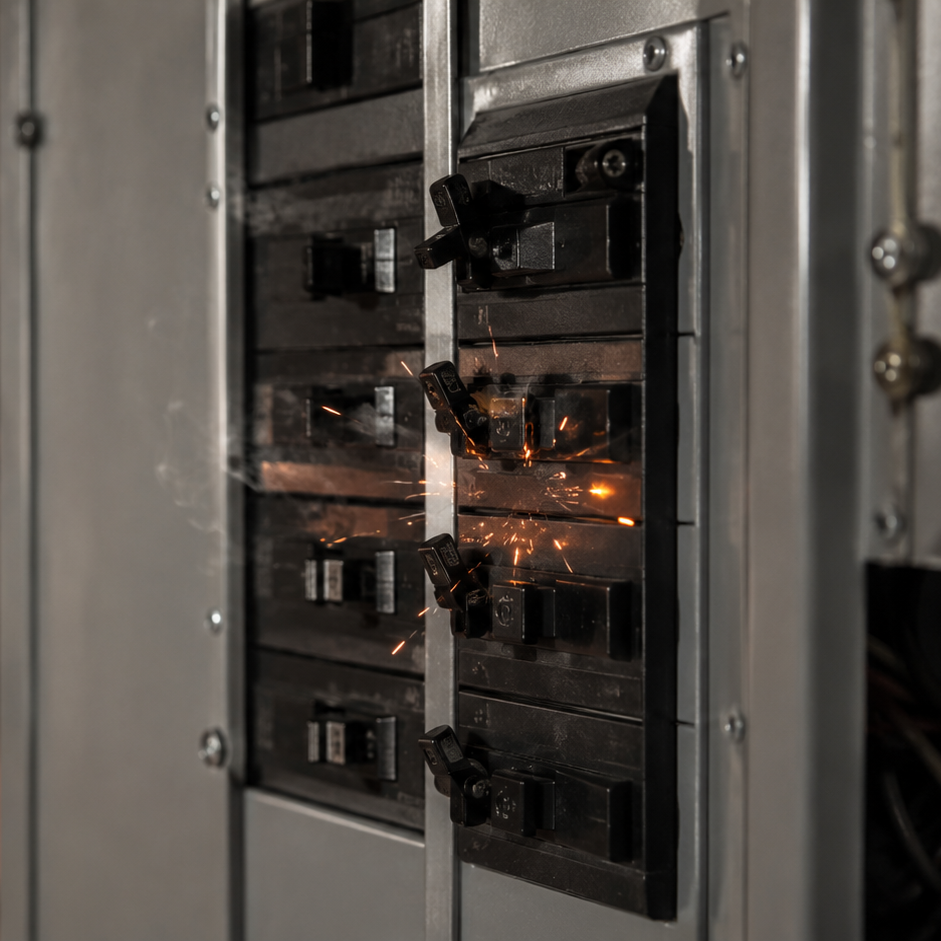
You're running the microwave and the space heater, the lights go dark, and you trudge to the panel to flip the breaker back on — again. A circuit breaker that keeps tripping is annoying, but it's not malfunctioning. It's doing exactly what it was designed to do: cut the power before a problem becomes a fire. The real question is what it's protecting you from, because the cause determines whether it's a simple fix or a sign of something hidden in your wiring.
A Tripping Breaker Is a Safety Device Working
A breaker's whole job is to stop the flow of electricity when something goes wrong — too much current, or current going somewhere it shouldn't. When it trips, it has detected one of those conditions and shuts the circuit off to prevent overheated wires, damaged devices, shock, or fire. So a breaker that trips repeatedly isn't broken; it's reporting a problem on that circuit over and over. Fixing the nuisance means finding what it keeps reacting to, not just resetting it harder.
The Common Causes
An Overloaded Circuit
This is the most common cause. Each circuit can safely carry only so much current, and when the devices plugged into it draw more than that limit at once, the breaker trips to prevent the wires from overheating. It's classic in older homes, where a single circuit may serve a whole room that now runs far more electronics than it was wired for. The tell is timing: the breaker trips when you turn on one more thing — a heater, a hair dryer, a microwave — on a circuit that's already loaded.
The fix is to redistribute the load (move devices to other circuits) or, if a circuit is chronically overloaded, have an electrician add capacity. In homes where modern power demands outstrip old wiring, this is a frequent issue.
A Short Circuit
A short circuit happens when a hot wire directly contacts a neutral wire, allowing a surge of current to flow with almost no resistance. The breaker trips instantly and forcefully to stop it. Shorts often come from damaged wiring, a faulty appliance or cord, or a problem inside a device. A short circuit is a genuine hazard — it can produce heat and sparks — and a breaker that trips the instant you reset it, especially with a burning smell or scorch marks, points this way.
A Ground Fault
A ground fault is similar: a hot wire contacts a grounded part of the system — a metal box, a ground wire, or a wet surface. It's especially common in damp areas like kitchens, bathrooms, garages, and outdoors, which is exactly why those areas use GFCI protection. Coastal humidity and salt air can worsen the corrosion and moisture problems that lead to ground faults. Like a short, a ground fault trips the breaker immediately and signals a wiring or moisture issue that needs attention.
A Failing Breaker
Less often, the breaker itself is the problem. Breakers wear out and can become weak, tripping at lower loads than they should or behaving erratically. Older panels — and certain outdated panel brands known to be unreliable — are more prone to breaker problems. If a circuit isn't overloaded and there's no short or ground fault, a worn breaker may be the cause, which an electrician can confirm and replace.
| What you notice | Likely cause | What it means |
|---|---|---|
| Trips when you add a device | Overloaded circuit | Too much load; redistribute or add capacity |
| Trips instantly, won't reset | Short circuit | Hot-to-neutral contact; wiring hazard |
| Trips in damp areas (kitchen, bath, outside) | Ground fault | Hot-to-ground/moisture; needs inspection |
| Trips at low or random loads | Failing breaker | Worn breaker; replacement likely |
Don't repeatedly reset a breaker that trips again immediately, and never replace a breaker with a higher-amperage one to "stop the tripping." The breaker is sized to protect the wiring; a bigger breaker lets the wires overheat and can cause a fire. Repeated instant tripping means a short or ground fault that needs an electrician.
What You Can Check and When to Call
You can safely do some basic narrowing down. If the breaker trips when you run several things at once, you likely have an overload — unplug some devices, spread them to other circuits, and see if the tripping stops. Note which circuit trips and what's running when it happens; that information helps an electrician enormously.
What you shouldn't do is keep forcing a breaker that won't stay reset, oversize the breaker, or open up wiring yourself. A breaker that trips the instant it's reset, trips with no obvious load, or trips alongside a burning smell, scorch marks, or warm outlets is signaling a short circuit, ground fault, or failing breaker — all of which are electrical hazards. Those need a licensed electrician to find and fix safely, especially in an older home where the wiring and panel may be past their prime.
Frequently Asked Questions
The tripping itself is protective, but what causes it can be dangerous. An occasional overload trip is a manageable nuisance, but repeated instant tripping often signals a short circuit or ground fault — actual wiring faults that can lead to overheating, shock, or fire if ignored. The danger lies in overriding the breaker or letting the real fault persist, so frequent tripping is worth diagnosing rather than living with.
That usually means either the circuit is overloaded when that appliance's draw is added, or the appliance itself has a fault, causing a short. Try plugging the appliance into a different circuit: if it trips there too, the appliance is likely the problem; if only the original circuit trips, that circuit may be overloaded. A persistent appliance-related trip is worth investigating before continued use.
No — this is dangerous. The breaker is sized to match the wiring it protects, and installing a higher-amperage breaker lets the wires carry more current than they can safely handle, which can overheat them and start a fire. The correct fix is to address the cause: reduce the load, repair the fault, or have capacity properly added. Never upsize a breaker as a workaround.
Tripping concentrated in damp areas or during wet weather points to a ground fault — a hot wire reaching a grounded surface, often aggravated by moisture. Kitchens, bathrooms, garages, and outdoor circuits are the usual spots, which is why they use GFCI protection. In coastal areas, humidity and salt air accelerate the corrosion and moisture intrusion behind ground faults, so these trips are worth having checked.
Call when the breaker trips instantly and won't stay reset, trips with little or no load, or trips alongside warning signs like a burning smell, scorch marks, buzzing, or warm outlets — these indicate shorts, ground faults, or a failing breaker. Also, call if a circuit is chronically overloaded and needs more capacity. Repeated tripping that you can't resolve by reducing the load is a job for a licensed electrician.