
Why Your Lights Flicker or Dim (Harmless or Not?)
QUICK ANSWER: Flickering or dimming lights range from harmless to hazardous. Simple causes include a loose or wrong-type bulb and a dimmer that doesn't match the bulb. More serious causes include lights dimming when a large appliance starts (a sign of an overloaded circuit or undersized service), a loose wiring connection (a real fire risk), or a problem with the panel or even the utility's supply. A single bulb flickering is usually minor; whole-house flickering, dimming when appliances cycle, or flickering with burning smells or warm switches points to wiring or panel issues that need an electrician.
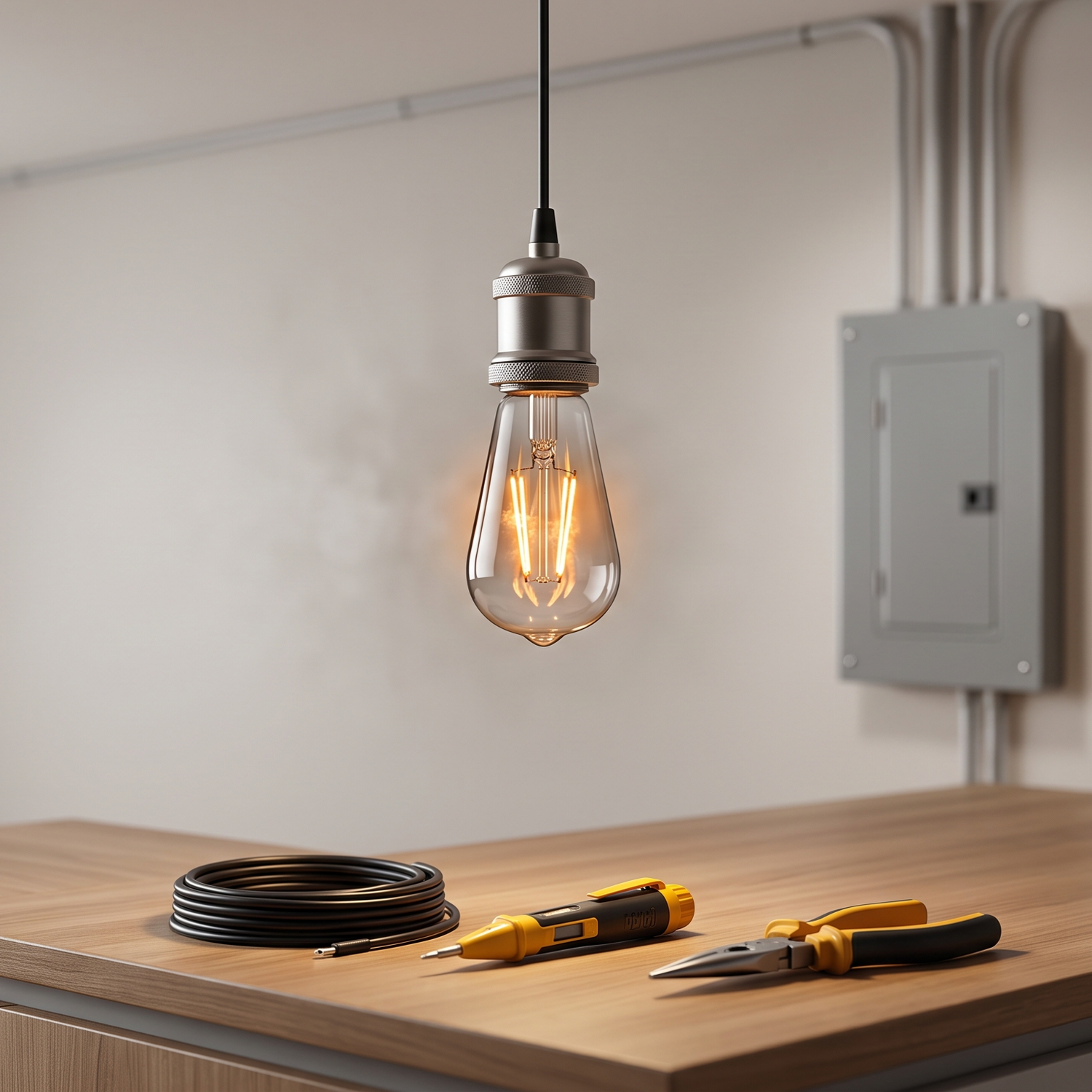
A light that flickers can be nothing — a bulb that needs tightening — or it can be the visible symptom of a wiring problem hiding in your walls. That's what makes flickering tricky: the same annoyance can mean "swap the bulb" or "you have a loose connection that could start a fire." The key is reading the pattern. Where the flickering happens, when it happens, and what else accompanies it tell you whether the fix is quick or the problem is a real electrical concern.
Flickering Is a Clue — Read the Pattern
Lights flicker or dim because the voltage reaching them is briefly dropping or fluctuating. The question is why, and the answer ranges from trivial to serious. A loose bulb causes a tiny, local interruption; a loose wire in a junction box or panel causes a more dangerous one. So rather than ignoring it or panicking, the useful move is to notice the pattern — one fixture or many, one moment or constant, with or without other warning signs — because that pattern points to the cause.
The Harmless Causes
A Loose or Wrong Bulb
The simplest cause is a bulb that isn't screwed in fully, making intermittent contact. Tightening it (when cool) often ends the flicker. Similarly, a bulb that's loose in a worn socket, or simply old and failing, can flicker as it nears the end of its life. Always start here, because it's free and it's frequently the answer for a single flickering fixture.
A Dimmer-and-Bulb Mismatch
If flickering happens on dimmer-controlled lights, the culprit is often a mismatch between the dimmer and the bulbs. Many older dimmers were designed for incandescent bulbs and don't play well with modern LEDs, leading to flicker, buzzing, or uneven dimming. Using LED-compatible dimmers and bulbs rated to work together usually resolves it. This is common and not a safety issue, just a compatibility one.
The Causes Worth Worrying About
Lights Dim When a Large Appliance Turns On
If your lights dim noticeably when the air conditioner, dryer, or another large appliance kicks on, that's a sign the circuit or your overall electrical service is straining under the load. Big appliances draw a surge of current at startup, and on an overloaded or undersized system, that surge briefly pulls voltage away from your lights. Occasional, slight dimming can be normal, but pronounced or frequent dimming points to a capacity problem worth evaluating — especially in older homes whose service wasn't built for modern demand.
A Loose Wiring Connection
This is the cause that makes flickering a safety issue. A loose or corroded connection — at a switch, an outlet, a junction box, or the panel — interrupts the flow of electricity and makes lights flicker, and that same loose connection generates heat that can lead to a fire. Coastal salt air can accelerate the corrosion behind these faults. Flickering tied to a loose connection often comes with other clues: warm or discolored switch plates, a buzzing sound, or a faint burning smell. This is not a wait-and-see situation.
A Panel or Service Problem
Flickering across the whole house, rather than at one fixture, can point to a problem at the electrical panel — a loose main connection, a failing breaker, or an overtaxed panel — or even an issue with the utility's supply to your home. Whole-house flickering, especially if it's persistent or worsening, is a sign to have the panel and service inspected.
| What you observe | Likely cause | Concern level |
|---|---|---|
| One bulb flickers | Loose, old, or wrong bulb | Low — try a new/tight bulb |
| Dimmer lights flicker or buzz | Dimmer-bulb mismatch | Low — use compatible LED dimmer |
| Lights dim when appliances start | Overloaded or undersized circuit/service | Moderate — evaluate capacity |
| Flicker with warm/buzzing switch | Loose wiring connection | High — fire risk, call an electrician |
| Whole-house flickering | Panel or utility supply issue | High — needs inspection |
Flickering lights accompanied by warm or discolored switch plates or outlets, a buzzing sound, or a burning smell indicate a loose, overheating connection — a genuine fire hazard. Don't ignore it or keep using the circuit. Turn it off if you can and contact a licensed electrician right away.
How to Tell Which You Have
Work from simple to serious. If a single fixture flickers, try a new, properly tightened bulb first, and check whether it's a dimmer-bulb compatibility issue. If that solves it, you're done. If flickering affects multiple lights, happens when appliances start, or comes with any warning signs — warmth, buzzing, burning smell, discoloration — stop troubleshooting and treat it as an electrical problem. Loose connections, overloaded circuits, and panel issues all involve hazards and live wiring that call for a licensed electrician, particularly in older homes where aging wiring and connections are more likely to be the cause.
Frequently Asked Questions
They can be, depending on the cause. A single bulb flickering due to being loose or old is harmless. But flickering caused by a loose wiring connection is a real fire hazard, because the loose point heats up as it arcs. Flickering that affects many lights, happens when appliances start, or comes with warmth, buzzing, or burning smells should be treated as potentially dangerous and inspected by an electrician.
Large appliances draw a surge of current when they start, and if your circuit or overall electrical service is overloaded or undersized, that surge briefly pulls voltage away from your lights, dimming them. Slight, occasional dimming can be normal, but pronounced or frequent dimming suggests your system is straining and may need more capacity — common in older homes not built for today's electrical loads.
Usually, because the dimmer and the LED bulbs aren't compatible. Many older dimmers were designed for incandescent bulbs and don't regulate LEDs smoothly, which can cause flicker or buzzing. Switching to a dimmer designed for LEDs and using bulbs rated as dimmable and compatible typically fixes it. This is a compatibility issue rather than a safety hazard, though persistent flicker is worth correcting.
Whole-house flickering is more concerning than a single fixture, because it points to something central — a loose connection or failing breaker at the panel, an overtaxed panel, or even an issue with the utility's supply. If it's persistent or getting worse, it warrants having the panel and service inspected by a licensed electrician rather than being ignored, since panel-level faults carry safety risks.
You can safely handle the simple causes: tightening or replacing a bulb, or switching to compatible LED dimmers and bulbs. Beyond that, flickering caused by loose wiring, overloaded circuits, or panel problems involves live electrical components and fire risk, which calls for a licensed electrician. If the easy fixes don't resolve it, or there are any warning signs, it's time to call a professional.