
Outlets Suddenly Dead? What Causes It
QUICK ANSWER: A dead outlet usually has one of a few causes: a tripped GFCI outlet that controls it (the most common and easiest fix — just reset it), a tripped breaker, a loose or failed wire connection at the outlet, a worn-out outlet itself, or back-stabbed connections that have loosened over time. Start by checking for a tripped GFCI nearby and the breaker panel. If those are fine, the problem is likely a wiring or outlet failure inside the box — which can generate heat and is a fire risk, so it's best handled by an electrician.
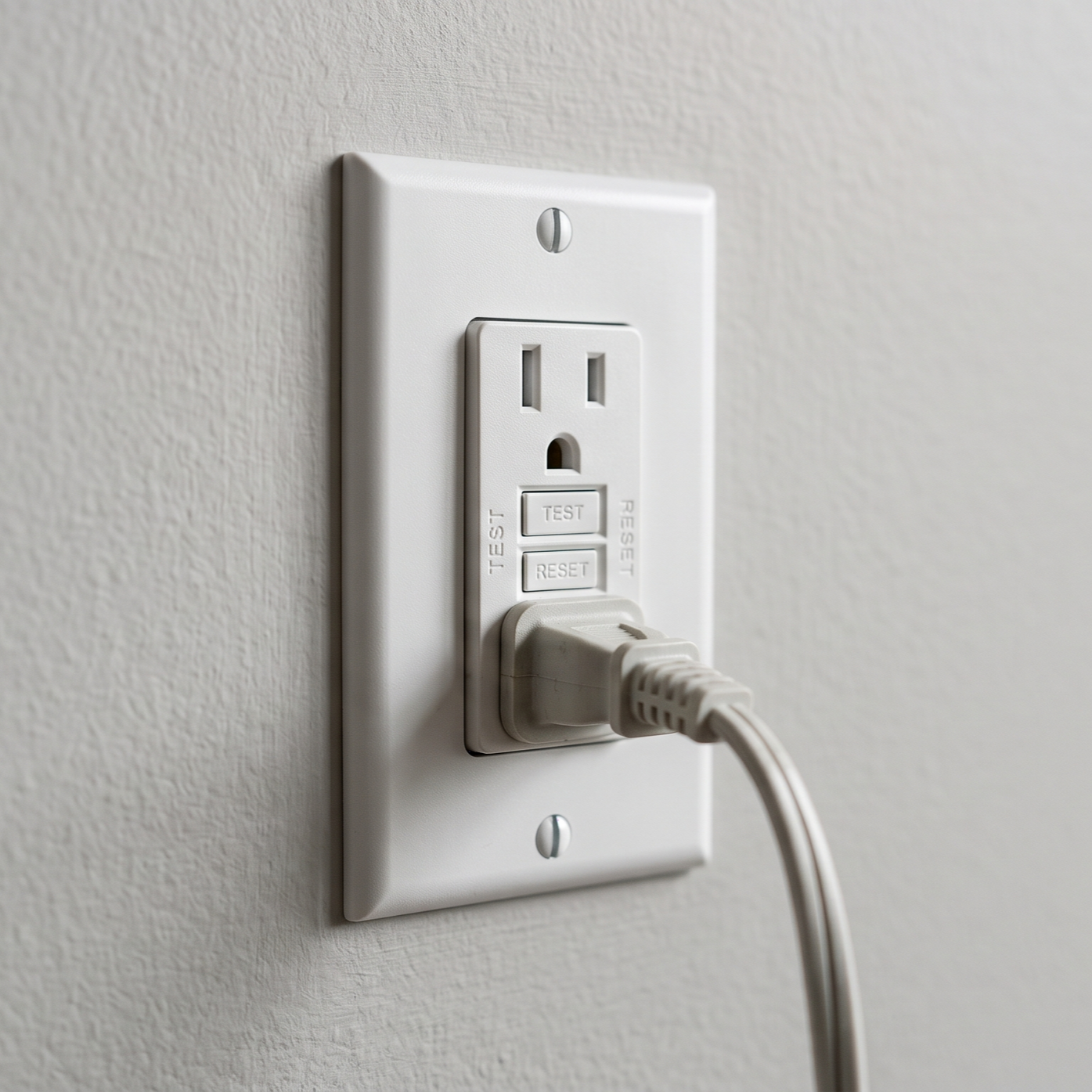
You go to plug in the vacuum, and nothing happens. The outlet's dead, but the lights are on, and the rest of the room works. A single dead outlet is a common household puzzle, and the cause ranges from a five-second reset to a wiring fault you can't see. The good news is there's a logical order to check, and the first two steps solve most cases without any tools at all.
An Outlet Goes Dead When Power Stops Reaching It
Power flows from your panel through the wiring, often via a protective GFCI device, to the outlet. An outlet stops working when that flow is interrupted somewhere along the line — a safety device has cut it, a breaker has tripped, or a connection has failed. Finding the dead outlet's cause is a matter of tracing back along that path from the simplest, most accessible point (a reset button) to the least (a loose wire inside a box). Most dead outlets are resolved in the first couple of steps.
Start With the Easy Resets
A Tripped GFCI Outlet
This is the single most common cause of a "dead" outlet, and the easiest to fix. GFCI (ground-fault) outlets protect against shock in areas near water, and one GFCI often protects several regular outlets downstream of it. When the GFCI trips, every outlet it protects goes dead — even ones in another part of the room or an adjacent space. The fix is to find the GFCI (look in kitchens, bathrooms, garages, outdoors, and basements for an outlet with "test" and "reset" buttons) and press reset.
Because a single GFCI can control outlets that are far from it, a dead outlet in one room is sometimes restored by resetting a GFCI elsewhere. This catches a lot of people by surprise and is always worth checking first.
A Tripped Breaker
If resetting GFCIs doesn't help, check the breaker panel. A tripped breaker cuts power to its whole circuit, which can include the dead outlet. Look for a breaker that's off or sitting between on and off, and reset it fully. If it trips again right away, stop — that points to an overload or fault on the circuit that needs investigation rather than repeated resetting.
The Causes That Need a Closer Look
A Loose or Failed Wire Connection
Inside the outlet box, wires connect to the outlet. Over years of use and thermal cycling, those connections can loosen, and a loose connection both interrupts power and generates heat, which is why this cause is a safety concern, not just an inconvenience. Coastal salt air can corrode connections and accelerate the problem. A loose connection may make an outlet work intermittently before it dies, and it can leave the outlet or plate warm or discolored.
Worn-Out or Damaged Outlets
Outlets wear out. The internal contacts that grip your plug weaken over time, and an old outlet can simply fail. You may notice it holding plugs loosely, working only when you wiggle the cord, or showing scorch marks before it stops entirely. A worn or damaged outlet should be replaced, both to restore function and because a failing outlet can be a hazard.
Back-Stabbed Connections
Many outlets allow wires to be pushed into spring-loaded holes in the back ("back-stabbing") instead of being secured under the screw terminals. These back-stabbed connections are notorious for loosening over time, causing the outlet — and sometimes others downstream — to go dead. Re-securing the wires properly under the terminals is the fix, and it's the electrician's work.
| Step | What to check | Likely fix |
|---|---|---|
| 1 | Nearby GFCI outlets (test/reset) | Press reset — most common cause |
| 2 | Breaker panel for tripped breaker | Reset fully; if it re-trips, investigate |
| 3 | Outlet warm, loose plug, scorch marks | Loose/worn outlet — electrician |
| 4 | Multiple outlets dead, no GFCI/breaker cause | Wiring or back-stab failure — electrician |
An outlet that is warm or hot to the touch, discolored, scorched, or buzzing has a loose or failing connection that can overheat and cause a fire. Stop using it, and don't open the outlet box yourself unless you're qualified and the power is confirmed off. Have a licensed electrician inspect it.
What's Safe to Do and What Isn't
A homeowner can safely handle the first steps: locate and reset GFCI outlets (including ones in other rooms), and check and reset the breaker. These two solve the majority of dead-outlet cases. You can also note useful clues — whether several outlets died at once, whether the outlet was warm or scorched, whether it had been working intermittently.
What you shouldn't do is open up the outlet, poke at the wiring, or keep using an outlet that's warm, buzzing, or scorched. Loose connections, worn outlets, and back-stabbed wiring all involve live electrical contacts inside the box and carry shock and fire risk. Those repairs belong to a licensed electrician, who can safely confirm the fault and fix it properly — especially in older homes where aging wiring and decades-old outlets are common.
Frequently Asked Questions
The most likely reason is a tripped GFCI outlet that controls it. A single GFCI can protect several outlets downstream, sometimes in different rooms, so when it trips, those outlets go dead even though no breaker has flipped. Look for a GFCI with test and reset buttons in nearby kitchens, bathrooms, garages, or outdoor areas and press reset. If that doesn't restore power, the cause is likely a wiring or outlet issue.
When multiple outlets die together, they're usually on the same circuit or controlled by the same GFCI. Check for a tripped GFCI first (which can control a string of outlets) and then the breaker for that circuit. If neither is the cause, the problem may be a loose or failed connection where the wiring feeds that group of outlets — a wiring issue that an electrician should diagnose.
Yes. A warm, hot, discolored, scorched, or buzzing outlet signals a loose or failing connection that's generating heat, which is a fire hazard. You should stop using it immediately and avoid opening it yourself. This is a clear case for a licensed electrician to inspect and repair, because the overheating connection can worsen and ignite surrounding materials if left in service.
Replacing an outlet involves working with live electrical wiring, and getting it wrong creates shock and fire risks, so it's best left to a licensed electrician — particularly if the cause is a loose connection, a back-stabbed wire, or older wiring you can't fully assess. The safe DIY steps are limited to resetting GFCIs and breakers. Anything inside the outlet box is an electrician's territory.
Back-stabbing is a wiring method in which wires are pushed into spring-loaded holes at the back of an outlet rather than secured under the screw terminals. The spring contacts tend to loosen over time, interrupting power and sometimes killing outlets downstream as well. The reliable fix is to move the wires to the screw terminals for a solid connection, which a licensed electrician can do safely.