
6 Signs Your Electrical Panel Needs an Upgrade
QUICK ANSWER: Your electrical panel likely needs an upgrade if you still have a fuse box or a low-capacity panel (like 60 or 100 amps) in a home full of modern devices, if breakers trip constantly, if the panel is warm to the touch or smells of burning, if you rely on power strips because you're out of circuits, if you have an outdated or recalled panel brand, or if you're adding major loads like an EV charger, addition, or large appliance. The panel is the heart of your home's electrical system, and these signs mean it can no longer safely supply what the home demands.
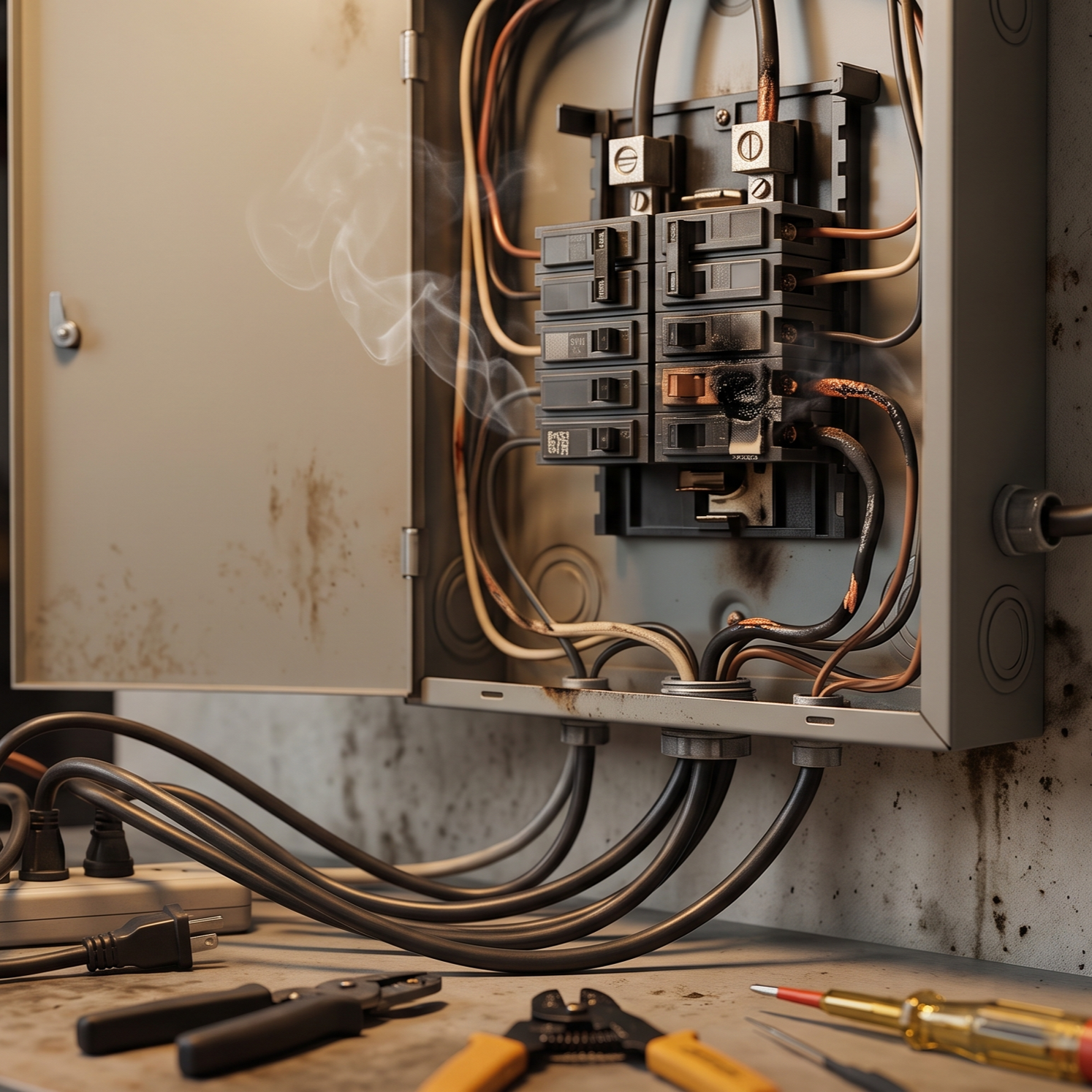
Your electrical panel is the one part of your home's wiring you probably never think about — a gray metal box in the garage or hallway that quietly routes power everywhere. But when it's undersized or aging, it becomes the bottleneck and the hazard for the whole house. Modern homes draw far more power than the homes of a few decades ago, and panels that were adequate then often aren't now. Knowing the warning signs tells you when that quiet box has become a problem worth solving.
The Panel Is the Heart of the System
Every circuit in your home runs back to the electrical panel, which takes incoming power and distributes it safely, with each breaker protecting its circuit. When the panel is too small, too old, or failing, it can't do that job properly — it runs out of capacity, struggles to handle the load, or stops protecting circuits reliably. Because everything depends on it, panel problems show up as whole-house symptoms, and they carry real safety weight. The signs below are the panel telling you it has fallen behind what your home needs.
The Warning Signs
You Still Have a Fuse Box or a Low-Amp Panel
If your home still uses a fuse box, or a panel rated at 60 or 100 amps, it was sized for an era of far lighter electrical demand. Today's households run air conditioning, multiple large appliances, computers, chargers, and increasingly EV chargers — loads that can outstrip an older panel's capacity. Many older South Bay and coastal homes still have these undersized panels, and upgrading to higher capacity (commonly 200-amps) is one of the most common modern electrical improvements.
Breakers Trip Constantly
Occasional tripping is normal; constant tripping is not. When breakers trip frequently across the home, it often means the panel and circuits can't keep up with the household's demand. A panel that is forever shutting off circuits is signaling that it's overtaxed and may need more capacity to serve the home safely.
The Panel Is Warm, Buzzing, or Smells Like Burning
A healthy panel is cool, quiet, and odorless. If the panel or breakers feel warm or hot to the touch, make a buzzing or crackling sound, or give off any burning or acrid smell, that's a serious warning of overheating or failing connections inside. These signs warrant prompt professional attention because overheating in a panel is a fire risk.
You Rely on Power Strips and Extension Cords Everywhere
If your home runs on a web of power strips and extension cords because there simply aren't enough outlets or circuits, the electrical system isn't keeping up with how you live. Chronic reliance on these is a workaround for too few circuits, and it's a sign the panel may need to be upgraded and circuits added rather than stretched with cords.
You Have an Outdated or Recalled Panel Brand
Certain older panel brands are known in the industry to be unreliable and are commonly flagged during home inspections as needing replacement. If your panel is one of these outdated or problem brands, an upgrade is recommended for safety, regardless of whether you've noticed other symptoms, because the panel itself can fail to protect circuits properly.
You're Adding a Major Electrical Load
Sometimes the trigger isn't a problem but a plan. Adding an EV charger, building an addition, finishing a basement, installing central air, or adding a large appliance can all demand more power than your current panel can supply. These projects often require a panel upgrade to provide the capacity and the open circuits the new load needs.
| Sign | What it indicates |
|---|---|
| Fuse box or 60–100 amp panel | Undersized for modern demand |
| Constant breaker tripping | Panel/circuits can't keep up |
| Warm panel, buzzing, burning smell | Overheating or failing connections |
| Reliance on power strips everywhere | Too few circuits for how you live |
| Outdated or recalled panel brand | Known reliability/safety concern |
| Adding EV charger, addition, big appliance | New load exceeds current capacity |
A panel that is warm or hot to the touch, buzzing, or emitting a burning smell is a fire hazard. Do not open the panel or attempt to investigate inside it yourself — the panel carries lethal voltage even with the main breaker off. Contact a licensed electrician promptly.
Why Putting It Off Carries Risk
A panel that's showing these signs isn't just inconvenient — it's the part of your home where electrical problems turn into fires. An overloaded or failing panel can overheat, and outdated panels may not trip when they should, leaving circuits unprotected. Beyond safety, an undersized panel limits what you can do with your home, blocking the EV charger, the remodel, or the appliance you want. Upgrading restores both safety and capacity, and it's foundational work — once the panel can properly supply and protect the home, everything downstream is safer and more capable. Because panel work involves lethal voltage and code requirements, it's firmly a licensed electrician's job.
Frequently Asked Questions
Many older homes have 60- or 100-amp panels, while modern homes typically need 200 amps to comfortably handle today's loads — air conditioning, large appliances, electronics, and EV chargers. The right size depends on your home and what you run, but if you have a low-amp panel and are constantly tripping breakers or planning to add major loads, an upgrade to higher capacity is often warranted. An electrician can assess the right rating for your needs.
A properly functioning fuse box isn't inherently dangerous, but fuse boxes are typically found in older homes and were sized for much lighter electrical demand than modern households place on them. They're also more prone to misuse, like installing the wrong-size fuse, which removes the protection. For most modern homes, upgrading from a fuse box to a properly sized breaker panel improves both safety and capacity.
A warm, hot, buzzing, or crackling panel signals overheating or failing connections inside, and a burning smell is even more urgent. These are serious warning signs of a potential fire hazard and shouldn't be ignored or investigated by opening the panel yourself. The safe response is to contact a licensed electrician promptly to inspect the panel, since the interior carries lethal voltage.
Often, yes. EV chargers draw significant power, and many existing panels — especially older or lower-capacity ones — don't have the spare capacity or open circuits to add one safely. Whether you need an upgrade depends on your current panel's rating and existing load. An electrician can evaluate whether your panel can support a charger as-is or needs to be upgraded first.
Certain older panel brands are widely recognized in the electrical industry as unreliable and are frequently flagged during home inspections for replacement because they can fail to protect circuits properly. If you're unsure what brand you have or whether it's one of concern, a licensed electrician can identify it and advise whether replacement is recommended for safety, even absent other symptoms.