
Federal Pacific and Zinsco Panels: Why Buyers Replace Them
QUICK ANSWER: Both Federal Pacific (FPE) Stab-Lok and Zinsco panels are widely flagged by home inspectors because their breakers can fail to trip during an overload or short — the exact moment a breaker is supposed to protect you. FPE breakers have been shown in independent testing to fail to trip at high rates; Zinsco breakers can overheat and fuse to the bus bar. Neither was ever recalled, but inspectors routinely recommend evaluation by a licensed electrician, and replacement is the common outcome.
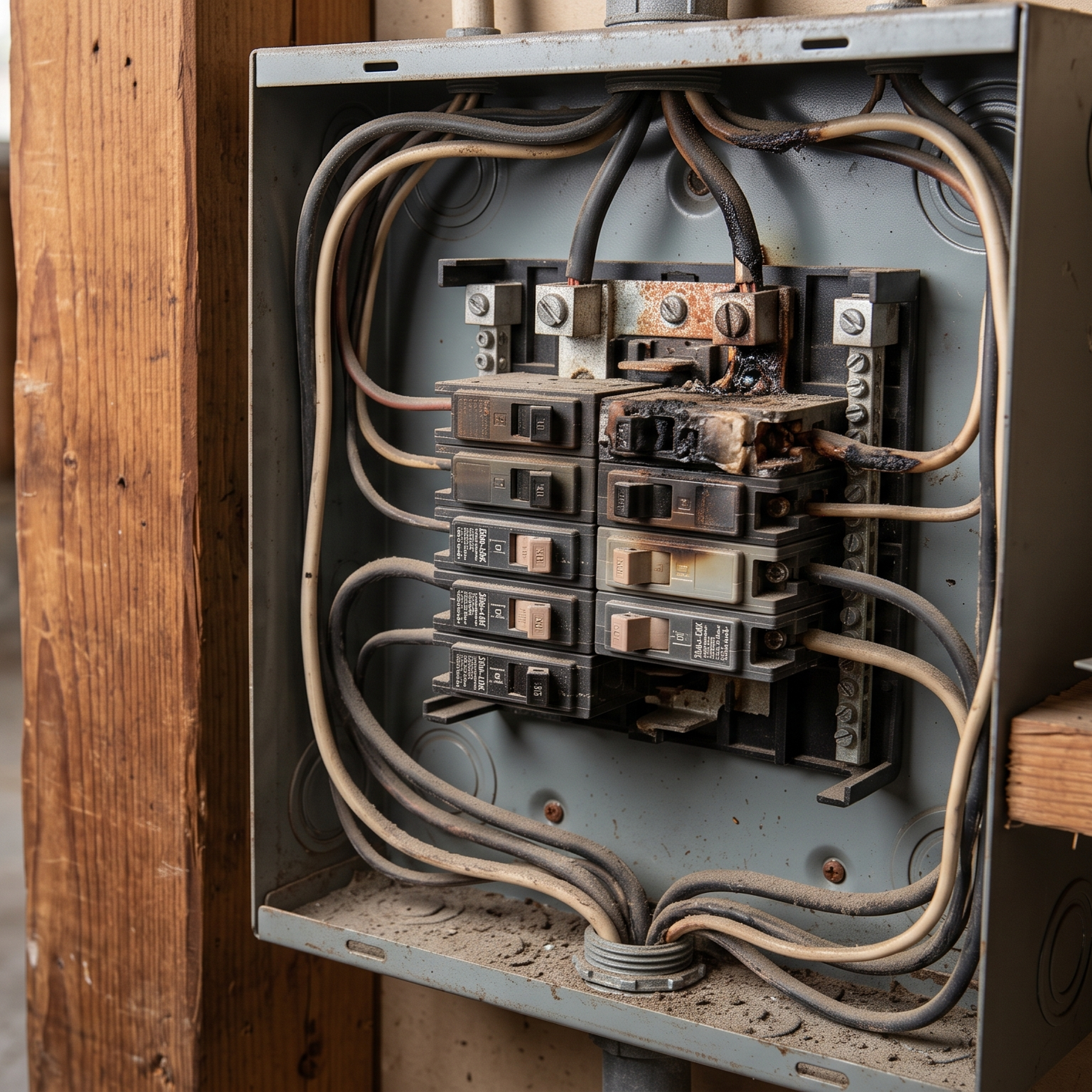
The home inspection comes back, and one line jumps out: the electrical panel is a Federal Pacific, or a Zinsco, and the inspector "recommends evaluation by a qualified electrician." Suddenly, a deal feels shaky, and you're not sure how worried to be. These two panel brands have a long and complicated reputation, so here's a straight account of what's known, what's still debated, and why so many homeowners end up replacing them.
What a Breaker Is Supposed to Do
A circuit breaker has one critical job: when a circuit draws more current than it safely can — an overload or a short — the breaker trips and cuts the power before the wiring overheats and starts a fire. Everything about both of these panels' reputation comes down to a doubt about whether their breakers reliably do that one thing.
The Federal Pacific (FPE) Story
Federal Pacific Electric's "Stab-Lok" breakers were installed in millions of homes from the mid-20th century into the 1980s. The concern is that a meaningful share of them don't trip when they should. In independent testing summarized by electrical-safety researcher Jesse Aronstein, Ph.D., P.E., a substantial portion of FPE breakers failed to trip under overload conditions — including roughly half of two-pole breakers in some test groups — and a small fraction would jam and not trip at all, no matter the overload. Failure rates rose further as the breakers aged.
Here's the part to state precisely, because it's often misreported: FPE panels were never recalled in the United States. The Consumer Product Safety Commission opened an investigation in 1980 and confirmed in its own testing that many FPE breakers failed certain calibration tests. But in 1983, the CPSC closed the investigation — not because it found the breakers safe, and not because it cleared them, but because the data available at the time did not, in its words, establish that the breakers posed a serious risk, and a full assessment would have cost several million dollars against the agency's limited budget. The Commission made no final determination either way and said it could reopen the matter if new information warranted. So the honest summary is: serious independent concerns, real test failures, no recall, and no official safety ruling.
The Zinsco Story
Zinsco (and the related GTE-Sylvania Zinsco) panels carry a different but related problem, flagged mainly by home inspectors and electrical engineers rather than a federal investigation. In these panels, breakers can overheat, physically melt, and fuse to the panel's aluminum bus bar. When that happens, the breaker may look like it's working — it's still energized and powering the circuit — but it can no longer trip, because it's bonded to the bus. Corrosion and arcing at that connection add to the trouble. As with FPE, Zinsco panels were never recalled.
| Federal Pacific (Stab-Lok) | Zinsco | |
|---|---|---|
| Core concern | Breakers fail to trip under overload | Breakers melt/fuse to the bus bar, can't trip |
| Evidence base | Independent testing + CPSC's own lab samples | Inspector and engineering field observation |
| Recall status | Never recalled; no CPSC determination | Never recalled |
| How to spot it | "Stab-Lok," "Federal Pacific," or "FPE" labels | "Zinsco" or "Magnetrip" label, often blue/silver |
Why Inspectors and Buyers Act on It
Even without a recall, the consensus among home inspectors — including those trained by InterNACHI — is to flag both brands and recommend evaluation by a licensed electrician. That recommendation has real-world teeth during a sale. Many insurers are wary of these panels and may decline a policy, require replacement before they'll bind coverage, or non-renewal of an existing one. That can stall a closing or a refinance, which is why buyers and sellers so often choose to replace the panel rather than argue the engineering debate.
There's an honest nuance worth keeping in view: not every FPE or Zinsco panel has failed, and many breakers are never called on to trip in the first place. There is industry disagreement about how to weigh the risk. But when the downside of a breaker that won't trip is a fire, and the fix is a known quantity, most people don't want to gamble — especially in a climate like ours, where cooling systems run hard for months, and a home's electrical system works near capacity for long stretches. An aging panel with a known tendency to fail to trip has little margin, which is why so many West Valley homeowners replace rather than roll the dice.
What Replacement Involves
Swapping one of these panels isn't a mystery job. A licensed electrician evaluates the panel, performs a load calculation, and installs a new panel or load center — sometimes paired with a service upgrade if the home's needs have outgrown the old capacity. The work requires a permit and a municipal inspection, which is exactly what you want on something this important. One safety note for homeowners in the meantime: never remove the panel's dead-front cover to poke around yourself. If you notice a panel that's warm to the touch, buzzing or crackling, discolored, or breakers that won't reset, leave it closed and call a licensed electrician to look.
Frequently Asked Questions
No. Neither FPE nor Zinsco panels were recalled in the United States. The CPSC investigated FPE in the early 1980s and closed the case in 1983 without a final safety determination, citing the cost of further investigation. The concern persists through independent testing and decades of inspector and engineering observation, not a government recall.
Look at the label on the panel and the breakers. Federal Pacific panels are marked "Stab-Lok," "Federal Pacific," or "FPE." Zinsco panels typically carry a "Zinsco" or "Magnetrip" label, often on a blue or silver face. Don't remove the inner cover to investigate — the brand markings are usually visible on the door or breaker faces, and a closer look is a job for an electrician.
It's actively debated, and the honest answer is that the risk is about reliability, not certainty. Independent testing shows FPE breakers fail to trip at concerning rates, and Zinsco breakers can fuse and lose the ability to trip — but not every panel has failed, and there's no federal ruling. Because the failure mode is a breaker that won't stop a fire, inspectors and electricians treat it as a real risk worth removing.
Often, yes. Many insurers are cautious about FPE and Zinsco panels and may decline coverage, require replacement before binding a policy, or non-renew. During a sale, that can complicate financing and closing. It's a major reason buyers ask for a replacement or a credit, and why sellers sometimes replace the panel before listing.
It varies with your home and market, since a simple like-for-like panel replacement costs less than one that also needs a service upgrade or other work. The real number comes from a licensed electrician after a load calculation and a look at your service. What's consistent everywhere is that the job needs a permit and an inspection.
Generally no. The concerns are tied to the panel design and bus bar, not just individual breakers, and matching reliable breakers to these specific panels is problematic. Electricians overwhelmingly recommend replacing the whole panel rather than swapping breakers within it. An evaluation will confirm the right path for your specific setup.