
Signs You Need an Emergency Electrician Right Now
You walk past the hallway outlet and catch a faint smell, something like an overheated appliance or a plastic that's been sitting near a heater too long. It's late, everyone in the house is already in bed, and the question running through your head is whether this can wait until morning or whether you need to make a call right now. Most electrical problems aren't true emergencies. A flickering bathroom light or a breaker tripping once during a storm can usually wait until a scheduled visit. But a handful of signs point to active danger, and knowing which ones those are is what actually keeps a bad night from turning into a house fire.
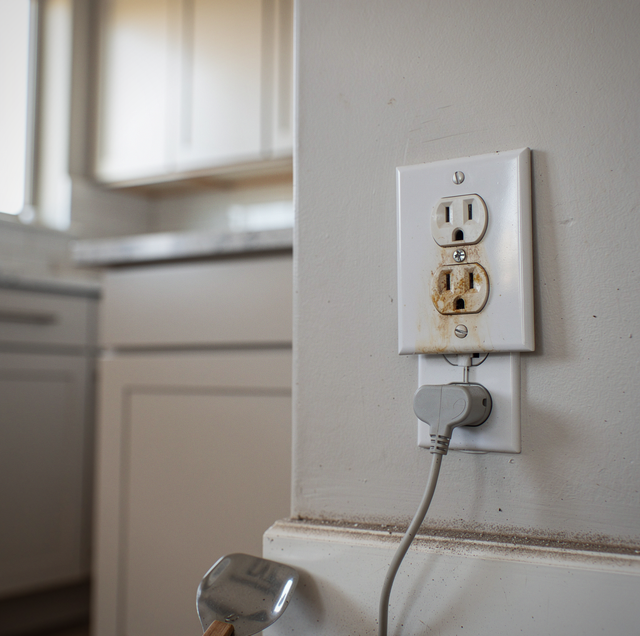
Step One: Recognize the Signs That Mean Stop, Don't Wait
A persistent burning or hot-plastic smell with no obvious source: If you've checked the stove, the toaster, and any space heaters and the smell is still there, it's likely coming from inside a wall, an outlet, or the panel itself. Insulation breaking down from heat gives off this smell well before anything is visible, which is exactly why it's dangerous; the damage is already happening behind a wall you can't see into.
Outlet or switch plates that are warm or discolored: A cover plate should never be warm to the touch. Brown or black scorch marks around the slots of an outlet mean arcing has already occurred at that connection point, generating enough heat to char the plastic. This is not a "keep an eye on it" situation; it's active damage at a connection that's likely to get worse with the next use.
Visible sparking when plugging something in: A tiny, brief spark when plugging into an older outlet can sometimes be static or a worn contact, but repeated or sustained sparking, or sparking that jumps rather than just flashes at the prongs, means the outlet's internal contacts are damaged and arcing every time current flows.
A breaker that won't reset, or trips again within seconds: A single trip during a lightning storm or from an overloaded circuit is normal. A breaker that trips instantly every time you reset it is telling you there's a short circuit or ground fault actively drawing far more current than the circuit is rated for, and the breaker is doing its job by refusing to stay closed.
Buzzing or crackling sounds from an outlet, switch, or the panel: Electrical current flowing correctly through a wire is silent. Any audible buzz, crackle, or hum at a fixed point (not a dimmer's normal light hum, which is different) means current is arcing across a gap it shouldn't be crossing.
Smoke, even a small wisp, from any outlet, switch, or the panel: This is the one sign that requires immediate action, not just a phone call.
What to Actually Do in the First Five Minutes
If you see smoke or smell strong burning with no clear source, get everyone out of the house first. Don't stop to unplug anything or shut off breakers if the smoke is heavy; a house fire produces toxic gases faster than most people expect, and no outlet is worth staying inside for. Call 911 if there's visible fire or heavy smoke.
If the issue is contained, such as a single warm outlet or a breaker that won't reset, shut off power to that specific circuit at the panel rather than trying to troubleshoot the outlet itself. Never touch a scorched outlet, a hot panel, or bare wiring with wet hands or while standing on a damp floor; water dramatically increases how easily current can pass through your body. If the panel itself feels hot or you can smell burning near it, don't open the panel cover. Shut off the main breaker if you can safely reach it, and wait outside for a professional.
Why These Situations Escalate Faster Than People Expect
Electrical fires often start in wall cavities or in the panel, meaning that by the time you can see or smell something wrong, the damage has usually been building for a while. A loose wire connection under a breaker terminal, for instance, creates a small amount of resistance at that single point. That resistance generates localized heat every time current passes through it, and the heat can further loosen the connection, which increases resistance again. It's a small feedback loop that gets worse every time the circuit is used, not a static problem that stays the same size until someone finally looks at it.
This is also why a "wait and see" approach with a warm outlet or a breaker that repeatedly trips rarely pays off. The underlying connection will continue to degrade between now and whenever it is finally addressed.
When It's Not Actually an Emergency
Not every odd electrical moment needs an after-hours call. A single flicker during a windstorm, one breaker trip after running a space heater and a hair dryer on the same circuit, or a GFCI outlet that trips once in a damp bathroom are normal protective responses, not signs of hidden damage. The distinguishing factors are repetition and physical evidence: does it keep happening, and are there heat, smell, sound, or visible marks involved? If the answer to both is no, it's reasonable to schedule a regular appointment instead of an emergency one.
Frequently Asked Questions
Yes, one time, as a diagnostic step. If it holds, the trip was likely a temporary overload, and you can monitor it. If it trips again immediately or within a few minutes, stop resetting it; repeated resets on an active short circuit can generate enough heat at the fault point to ignite nearby insulation.
Yes. High-draw devices like space heaters or window AC units left plugged into a standard 15-amp outlet for hours can warm the outlet, even with sound wiring, since the outlet itself is operating near its rated limit. The fix there is usually a dedicated higher-amperage circuit for that appliance, not emergency repair, but it's worth having checked either way.
Yes. Running a space heater or another high-draw appliance off a household extension cord for hours can produce the same heat, smell, and discoloration as a wiring fault, even when the home's permanent wiring is completely sound. Backfeeding a portable generator into the home's wiring without a properly installed transfer switch creates a similar hazard at the outlet, plus a serious risk to utility line workers, which is why a transfer switch installed by a licensed electrician, not a cord run into a wall outlet, is the safe way to connect a generator.
An arc-fault circuit interrupter (AFCI) breaker detects the specific electrical signature of arcing, such as a loose connection or a damaged wire, and trips even at normal current levels because it senses the arc pattern itself, not just excess amperage. A standard breaker only trips on overload or short-circuit current. If an AFCI breaker keeps tripping with no obvious overload, that's a strong signal of a loose connection somewhere on that circuit rather than a simple "too many things plugged in" problem.
If you can't identify the specific circuit and there's active heat, smell, or sparking, shutting off the main breaker is a reasonable precaution while waiting for a professional, since it removes power to the entire panel rather than leaving other circuits energized while you guess. Only do this if the main breaker is easily reachable without touching the panel cover or any exposed components.
Response times vary by how many calls are already in progress, but a same-night response for an active hazard, like sparking, smoke, or a panel that won't stay powered off correctly, is standard for emergency electrical service, as opposed to routine repairs that get scheduled for the next available appointment.