
How Many Circuits Does a Modern Kitchen Need? Count the Loads
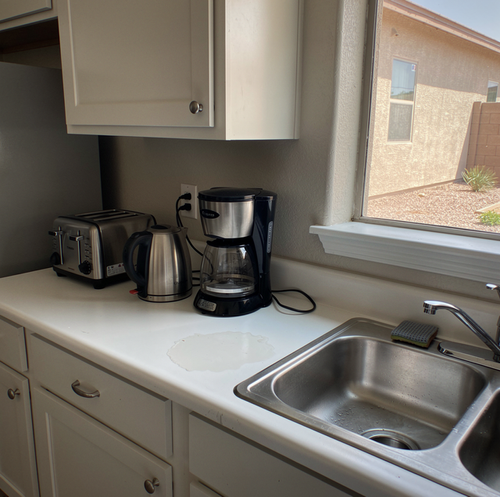
A kitchen has a longer list of separate circuits than a bedroom, living room, or hallway. A bedroom might run on one shared circuit for its receptacles and lights, while a kitchen holds a refrigerator that stays plugged in around the clock, a dishwasher with its own heater, a disposal motor, a cooking appliance on a 240-volt line, and a counter full of small appliances that make heat. Each of those loads has its own demand and installation instructions, so the question of how many circuits a kitchen needs has no single number as an answer. The count is the sum of a list. Build the list first, and the number will follow.
The Kitchen Load Inventory
A kitchen electrical plan starts by listing every load the finished room will carry and deciding, one load at a time, whether it shares a circuit or has its own. Two things decide each line: the appliance's installation instructions, which state the circuit it expects, and the local inspector, who approves the plan and the finished wiring. This inventory pairs each kitchen load with its planned status and the factor that settles the question.
| Kitchen load | Shared or its own circuit | What decides it |
|---|---|---|
| Countertop receptacles | Two or more circuits for the counter receptacles, kept free of lights and fixed appliances | The counter layout and the local inspector |
| Refrigerator | Its own circuit in a remodel plan | The installation instructions and the inspector |
| Dishwasher | Its own circuit in a remodel plan | The installation instructions |
| Disposal | Its own circuit, unless the instructions and the inspector accept a shared one | The installation instructions and the inspector |
| Microwave | Its own circuit when built in or mounted over the range | The installation instructions |
| Range, or cooktop and wall oven | A 240-volt circuit for each cooking unit | The appliance's rating and the inspector |
| Range hood | Its own circuit or shared with lighting, per its instructions | The installation instructions |
| Lighting | A lighting circuit kept apart from the counter receptacles | The fixture count and the inspector |
Add up the middle column for a kitchen with an electric range, and the list reaches eight circuits before any specialty appliance joins it. A gas-powered kitchen drops the 240-volt line, and a kitchen without a disposal or a built-in microwave drops those. That spread is why a single rule-of-thumb number can be misleading: two kitchens of the same size can differ by several circuits because they have different appliances.
Countertop Receptacle Circuits and Why More Than One
The counter is the one part of a kitchen whose load changes with whatever gets plugged in. A toaster, an electric kettle, an air fryer, a coffee maker, and a stand mixer can all land on the same stretch of counter, and the heat-making ones among them draw their full rated power for as long as they run. A single circuit has one breaker and one fixed capacity. Put two heating appliances on it at the same time, and their combined draw can exceed what the wire and breaker are rated to carry, causing the breaker to open.
Splitting the counter across two or more circuits gives the room two separate budgets instead of one. The kettle can run on one circuit while the toaster oven runs on the other, and neither sees the other's load. When one circuit trips, the receptacles on the other circuit keep working, so a single overload does not take out every counter receptacle at once.
A remodel plan lays these circuits out as 20-amp circuits, reserved for receptacles, with no lights or fixed appliances tapped into them. Keeping them clean of other loads is the point: every watt of that capacity stays available for whatever gets plugged in on a given morning. How many counter circuits a kitchen ends up with depends on the length of the counter, the number of work zones, and whether an island or peninsula has its own receptacles. A long galley and a kitchen with a large island can each justify a third circuit so that a second cook has power that does not compete with the first.
Appliances That Take Their Own Circuit
One appliance on one breaker is the whole idea of a dedicated circuit, and in a kitchen the fixed appliances are the ones that claim them. The refrigerator, dishwasher, disposal, and built-in microwave each arrive with installation instructions that state the circuit they expect, and the plan follows those instructions line by line.
Two details shape this part of the plan. The first is the over-the-range microwave, which also serves as the range hood in some layouts: when one unit does both jobs, it uses a single circuit, and the hood line in the inventory disappears. The second is the choice between plug-in and hardwired connections. A refrigerator plugs into a receptacle behind it, while a dishwasher or disposal can be either cord-connected or wired directly, depending on the model. That choice changes where the receptacle or junction box sits in the cabinet, which is why the appliance models need to be settled before the wiring goes in.
The Range, Cooktop and Oven on 240-Volt Circuits
Electric cooking is the largest single load in a kitchen, and it runs on the 240-volt circuit type rather than the 120-volt circuits that feed everything else in the room. A freestanding or slide-in range combines the cooktop and oven in one appliance. It takes one 240-volt circuit, connected either through a matching heavy-duty receptacle behind the range or by a hardwired connection, depending on the model.
Separating the cooktop from a wall oven changes the count. Each unit becomes its own load with its own rating, and a remodel plan provides each one with its own 240-volt circuit unless the installation instructions and the inspector approve a shared feed. A double wall oven or a second oven adds another line to the inventory.
Switching fuel changes the list as well. A kitchen moving from a gas range to an electric or induction range requires a 240-volt circuit where none existed, and that single new line can be the deciding factor in whether the current panel can handle the remodel.
The size of each cooking circuit is set by the appliance's rating, not by the size of the old circuit it replaces. A new range with a higher rating than the one it succeeds may need heavier wire and a different breaker than the existing circuit provides, even though the new range fits the same opening. For that reason, the cooking appliances are chosen before the circuit is sized, never after.
GFCI and AFCI Protection in a Kitchen
Which kitchen receptacles need ground-fault (GFCI) protection is set by the local code in force and confirmed by the inspector, so the plan follows the current local requirements rather than whatever the old kitchen had. Whether kitchen circuits also need arc-fault (AFCI) protection is decided the same way, by the local code and the inspector. Both answers affect the plan, because protection built into a breaker lives in the panel, while protection built into a receptacle lives on the wall.
Planning Circuits in a Remodel and Panel Space
A remodel is the point at which a kitchen's circuit count can change, because the walls and ceiling are open, allowing new runs to reach the panel without fishing wire through finished surfaces. The planning follows a fixed order.
Settle the appliance list: The refrigerator, dishwasher, cooking appliances, microwave, and hood are chosen first, and their installation instructions are collected. Each set of instructions becomes a line in the inventory.
Lay out the counter: The counter circuits are placed around the work zones, the sink, the island and any peninsula, so each stretch of counter has receptacles and a circuit budget behind them.
Check the panel: Every new circuit needs a breaker position, and 240-volt circuits need more panel space than 120-volt ones. Slots are only half of the question. The panel and the service feeding it also have a total capacity, and an electrician runs a load calculation to confirm the new kitchen fits within it alongside everything else in the house.
Plan the inspection: The rough wiring is inspected with the walls open, before drywall covers it, and the finished installation is inspected again at the end.
When the panel has neither the slots nor the capacity for the new kitchen, the remodel becomes a panel upgrade discussion as well. That question is best settled during demolition, not after the counters are installed.
Swapping a larger breaker onto a kitchen circuit that keeps tripping lets the wall wiring carry current above its rating, and its insulation can scorch and start an unseen fire. Breaker changes and new circuits are the sole responsibility of a licensed electrician.
Frequently Asked Questions
A receptacle with one slot shaped like a sideways T is a 20-amp receptacle, built to accept the plug with one blade turned sideways that only 20-amp appliances carry. A standard face does not settle the question either way, because a 15-amp-face receptacle can also sit on a 20-amp counter circuit; the breaker that feeds it has the answer.
Yes. A gas range plugs into an ordinary 120-volt receptacle behind it, which powers the electronic igniters, the clock, the oven light and the control board. Without that power, the burners on some models will not light when the knob is turned.
In some layouts, yes. The same receptacle circuits that serve the counter can extend to receptacles in a pantry, a breakfast nook or a dining room, where the local inspector accepts it. They do not extend to lighting, to outdoor receptacles, or to rooms outside that group.
Look for the data plate. On some ranges it sits on the frame behind the storage drawer, and on others on the edge of the oven cavity, visible with the door open. It lists the rating in kilowatts at 240 volts, and that figure is what the circuit is sized from.
A microwave that sits on the counter plugs into a counter receptacle and draws from that circuit's budget. Its rating label lists the input power in watts or amps, and that input figure is higher than the cooking power printed on the box because part of the input is converted to heat within the unit. The input figure is the one to count against the circuit.
Not safely at full power. An appliance rated at 1,500 watts draws about 12.5 amps at 120 volts, so two of them together draw about 25 amps, which is more than a 20-amp circuit can carry.
Reserve kitchen electrical remodeling — each new circuit is sized from the appliance it will feed, with room in your panel confirmed while the walls are still open. Zimmerman Electric Company serves Redondo Beach, Torrance, and Manhattan Beach. Call (310) 378-1323.