
Aluminum Wiring: The Hidden Fire Risk in Older Homes
For roughly a decade spanning the late 1960s into the 1970s, copper prices climbed, and builders reached for a cheaper conductor to run the branch circuits inside single-family homes. That conductor was aluminum. Millions of houses got single-strand aluminum wiring feeding their outlets, switches, and light fixtures. The material worked, the lights turned on, and for a while nobody thought twice about it.
Decades later, that same wiring is still in the walls of a lot of those homes, and it carries a risk the original installers did not fully anticipate. The danger is real but specific: it lives at the connection points, not usually in the wire running through the wall. Understanding that distinction is the whole point of this article, because it changes what you look for and what a qualified electrician actually repairs.
QUICK ANSWER: Aluminum branch wiring was installed in many homes built during the late 1960s and 1970s. It can be a fire hazard because aluminum expands, contracts, and oxidizes more than copper, which loosens terminal connections over time. Loose or corroded connections overheat and can arc. The wire itself is usually sound; the terminations are the weak point, and only a licensed electrician should evaluate and repair them.
What Aluminum Wiring Actually Is
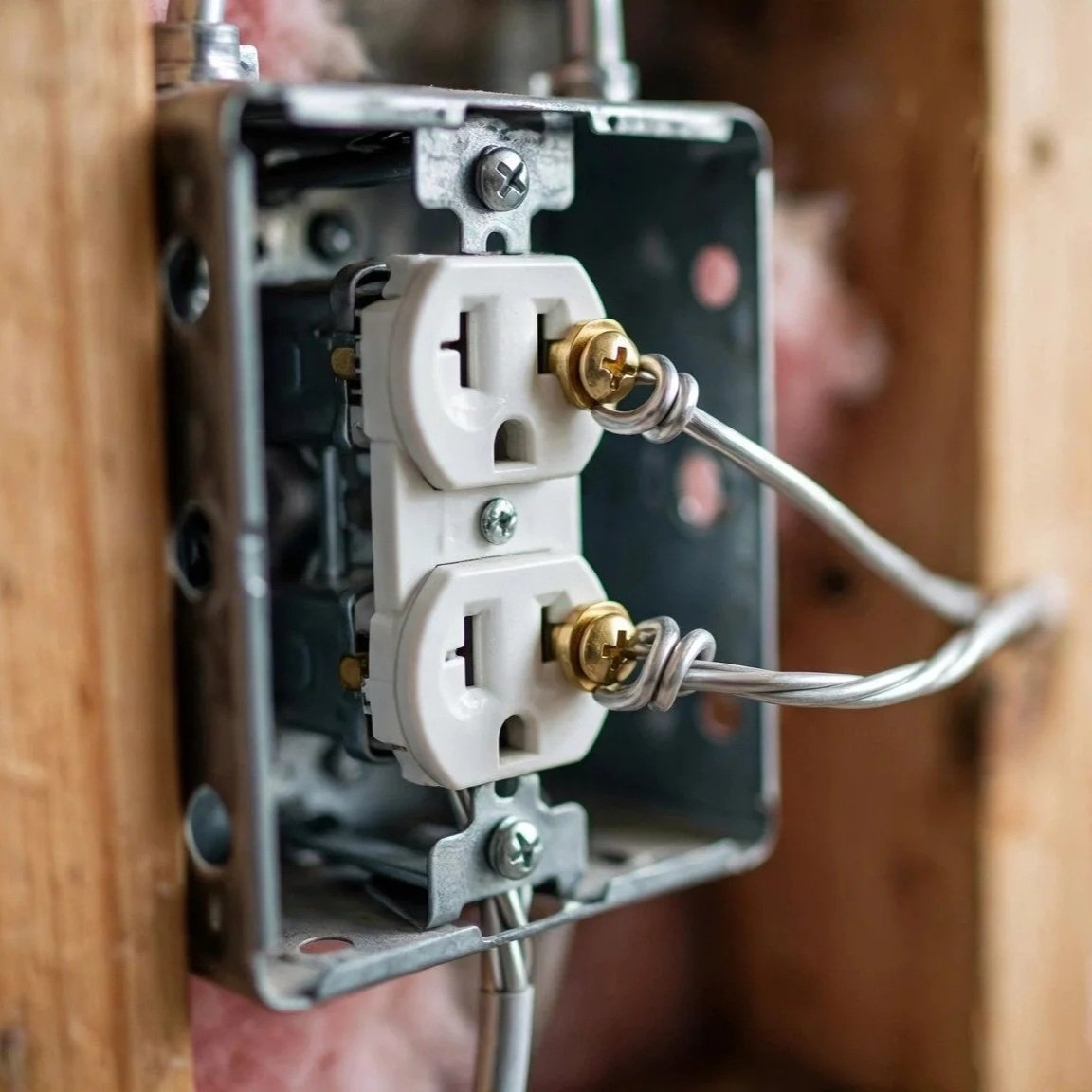
Aluminum wiring is exactly what it sounds like: an electrical conductor made from aluminum instead of copper. The kind that causes concern in homes is single-strand aluminum used for branch circuits, meaning the smaller-gauge wire that carries power from the panel out to receptacles, wall switches, and ceiling fixtures. This is different from the larger stranded aluminum still used today for service-entrance cables and some feeders, which is engineered and terminated for that job and is not the issue here.
The branch-circuit version was a product of its moment. When copper got expensive, aluminum was the affordable substitute, and it conducts electricity well enough to do the work. A house wired this way looks completely ordinary from the living room. You would only know it was there by pulling a device out of the wall and reading the conductor, or by finding the marking on the cable jacket, which is why so many owners have no idea what is behind their outlets.
Where It Tends to Show Up: If your home was built or substantially rewired during that late-1960s-to-1970s window, single-strand aluminum branch wiring is a real possibility. Additions, converted garages, and finished basements from that era can also carry it even when the original structure is older. The only reliable way to confirm it is inspection, and that inspection is a job for a licensed electrician rather than a flashlight-and-guesswork afternoon.
Why the Connections Are the Weak Point
Here is the part that trips people up. The aluminum conductor itself, sitting quietly inside the wall, is generally fine and carries current without trouble. The trouble gathers at every place the wire is fastened down: the screw terminals on outlets and switches, the wire nuts in junction boxes, the lugs in the panel. Three physical behaviors of aluminum conspire at those points.
Thermal movement: Every conductor warms up when current flows and cools when it stops, expanding and contracting with each cycle. Aluminum moves more than copper for the same temperature change. Repeated over years, that motion works a terminal screw slightly looser, the way a bolt on a vibrating machine backs itself out over time. A looser connection has more electrical resistance, more resistance makes more heat, and more heat drives more movement. The cycle feeds itself.
Oxidation: Aluminum reacts with air to form a thin, hard oxide layer on its surface. On copper, the equivalent layer is a decent conductor, but aluminum oxide resists electricity. That resistive film builds at the contact point and, again, turns into localized heat right where the wire meets the device.
Softness and creep: Aluminum is a softer, more malleable metal than copper. Under the steady clamping pressure of a terminal screw, it slowly deforms and flows away from the pressure, a behavior engineers call creep. The clamp loosens even without much temperature swing.
Put those together, and you get a connection that gradually degrades, heats up, and can eventually char the surrounding device or box, arc, and ignite nearby material. The wire in the wall never had to fail for a fire to start. The termination did.
An older aluminum connection behaves a bit like a garden hose fitting that was hand-tight years ago: nothing looks wrong from across the yard, but the seal has quietly worked loose, and the failure only becomes obvious when it is already leaking. With wiring, the leak is heat, and you often cannot see it until there is damage.
To be fair about the material, aluminum branch wiring does not fail on a fixed schedule, and plenty of these connections have held for decades without incident. The problem is that you cannot tell a sound connection from a deteriorating one by looking at the wall, and the failure mode is fire. That combination is why it gets treated seriously rather than shrugged off.
The Warning Signs Worth Taking Seriously
Because the hazard is heat at a hidden connection, the symptoms show up as heat, intermittent power, and smell. Any one of these in a home that may have aluminum wiring deserves a prompt call to a licensed electrician.
Outlet or switch plates that feel warm or hot to the touch, even with nothing heavily loaded plugged in.
Discoloration, browning, or scorch marks on a receptacle, a switch, or the plate around it.
Lights that flicker or dim in a pattern tied to one outlet or circuit rather than the whole house.
A faint smell of hot plastic or something burning near an outlet, switch, or fixture.
Breakers that trip repeatedly on a specific circuit, or outlets that go dead and come back.
A burning smell or a hot outlet is not a wait-and-see situation. Stop using that circuit and get a professional out. These are the signs that a connection is already overheating, and the gap between overheating and ignition can be short.
What to Do, and What Not to Do
Do not simply swap in a standard replacement outlet or switch. Ordinary devices are not rated for direct contact with aluminum, and pairing the wrong metals accelerates the exact corrosion and loosening you are trying to stop.
Do not assume that twisting the wires together under a common wire nut solves it. Standard connectors are not an approved method for joining aluminum to copper in this application.
Do call a licensed electrician to identify the wiring, evaluate the condition of the connections, and carry out an approved repair. Identification and repair are both professional work, not because the rules say so for their own sake, but because the tools, the listed parts, and the judgment about each connection are what make the fix actually safe.
A burning smell or a hot outlet in a home that may have aluminum wiring is not a wait-and-see situation, so stop using that circuit and get a professional out. Do not swap in a standard replacement outlet or switch, since ordinary devices are not rated for direct contact with aluminum and pairing the wrong metals accelerates the corrosion and loosening you are trying to stop. A residential panel carries lethal voltage, so identification and repair are professional work.
How Professionals Repair It
There is no single mandatory fix; there are a few accepted approaches, and a qualified electrician chooses based on the home. At a high level:
Approved connector repairs. One well-known method uses a special crimp system, sold under the COPALUM name, that permanently joins a short copper pigtail to the existing aluminum conductor with a dedicated tool, so the device only ever touches copper. A newer alternative is a listed connector such as the AlumiConn, a small terminal block that clamps the aluminum and a copper pigtail with set screws torqued to spec. Both are designed and tested for aluminum-to-copper joints, which is what makes them acceptable where a standard wire nut is not.
Aluminum-rated devices. Where devices are being replaced rather than pigtailed, only outlets and switches specifically listed for use with aluminum are used. These are marked for that purpose and are built to tolerate the metal's behavior.
Full copper rewire. In some homes, the electrician may recommend replacing the aluminum branch wiring with copper outright. It is the most involved option, and it removes the source of the concern entirely rather than remediating connection by connection.
Which path fits depends on how the home is built, how accessible the wiring is, and what the electrician finds during evaluation. That is the judgment call you are hiring for.
Frequently Asked Questions
No. It means the home carries an elevated risk that gathers at connections, not a certainty. Many aluminum connections operate for years without a problem. The reason it is taken seriously is that a deteriorating connection is invisible from outside the wall and its failure mode is heat and potential ignition, so the safe approach is professional evaluation rather than waiting for a symptom.
A conductor's exposed end reveals the metal directly: aluminum is a dull silver-gray, copper is reddish-orange. Electricians also read the printing stamped along the cable jacket, which often spells out the conductor material or marks it "AL." Because confirming it usually means safely pulling devices from live boxes, this is done by a professional, not by peeking behind a plate.
Yes. Devices approved for aluminum are stamped with a marking such as "CO/ALR" on the mounting strap, which signals they are listed for both copper and aluminum. A device with only "CU" or no aluminum marking is copper-only and is the wrong part for these circuits, which is one reason a look-alike swap by an untrained hand is risky.
Not usually. Large appliance and service conductors made of stranded aluminum are a separate, engineered application with their own terminations and are not the branch-circuit problem this article covers. The concern here is specifically the smaller single-strand aluminum feeding general-purpose outlets, switches, and light fixtures.
No. The antioxidant paste an electrician may apply during a proper repair slows corrosion at the joint, but it is one element of an approved method, not a standalone cure. Smearing it on a loose terminal without the correct connector and torque leaves the thermal-movement and creep problems untouched, so the connection can still loosen and overheat.
If an outlet is hot, discolored, or smells like burning plastic, stop using that outlet and, if you can do it safely from the panel, switch off the breaker feeding it. Do not open devices, junction boxes, or the panel to investigate. The panel carries lethal voltage, and disturbing a compromised aluminum connection can turn a slow problem into an immediate one.